

This website has a .gov link

The .gov means it’s official.

Louisiana government websites often end in .gov. Before sharing sensitive information, make sure you’re on a Louisiana government site.

HTTPS Connection

The site is secure.

The https:// ensures that you are connecting to the official website and that any information you provide is encrypted and transmitted securely.

Jason G. Green is a Maryland-born community organizer, attorney, and entrepreneur. A graduate of Washington University in St. Louis and Yale Law School, he served as Associate White House Counsel to President Obama, advising on economic and domestic policy. Green co-founded SkillSmart and serves as CEO of EverGreen Labs, supporting organizations that expand economic opportunity. He is a trustee for the Pleasant View Historic Association and directed the award-winning documentary Finding Fellowship. He splits his time between Maryland and Dallas, Texas, with his wife, Ritu, and son, Aidan.


Schedule

Will be posted when available.


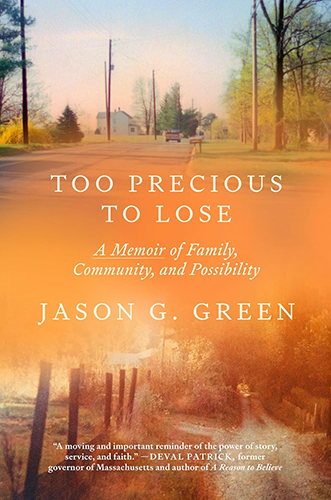
Too Precious to Lose: A Memoir of Family, Community, and Possibility

A moving and inspiring memoir from a former Obama White House staffer, about his rural Maryland family’s untold history, the merger of three churches—one Black, two white—and how a radical embrace of community became their salvation, and his.

“A moving and important reminder of the power of story, service, and faith.”—Deval Patrick, former governor of Massachusetts and author of A Reason to Believe

Jason G. Green was raised on fellowship—literally. Fellowship Lane served as a spiritual metaphor throughout his coming of age. A precocious preacher’s kid, Green felt a call to the ministry but ultimately devoted himself to public service. After working on Barack Obama’s presidential campaign, the young attorney spent four and a half years serving in the White House as special assistant to President Obama.

However, Green’s government career was cut short by a devastating call. It seemed his beloved ninety-five-year-old grandmother was on her deathbed. At her side, he listened in disbelief while she detailed her life story dating back to her 1918 birth in Quince Orchard, a town that once stood where they now sat, erased by the vestiges of time. How could he have never known the legacy of this robust community that he’d descended from? How could its entire existence have vanished from history but for the memory of a few elders? Green’s historical research uncovered a surprising trove of tales about his newly freed ancestors who built an African American house of worship, and whose progeny, on the eve of Dr. Martin Luther King, Jr.’s assassination, made the brave decision to create an integrated church. Quince Orchard’s lost story is part of what Green calls the texture in the American fabric: the moral leadership of the Black church, the longstanding resilience of the Black community, and the transformative love of the Black family.

Fueled by a new understanding of his own roots, Green traces his paternal family through a century of life in a single place. Seeking answers to deeply personal, contemporary questions about belonging, he finds that and more truths from the compassionate, communal-led lives of his forebearers.