
This website has a .gov link

The .gov means it’s official.

Louisiana government websites often end in .gov. Before sharing sensitive information, make sure you’re on a Louisiana government site.

HTTPS Connection

The site is secure.

The https:// ensures that you are connecting to the official website and that any information you provide is encrypted and transmitted securely.

Monica Patrice Barra
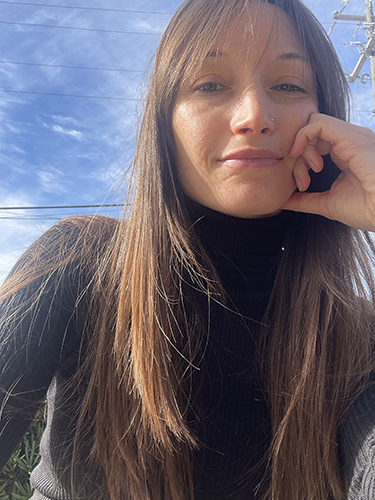
Monica Patrice Barra is a cultural anthropologist with an interdisciplinary background in cultural geography and American Studies. Her scholarly and creative work is shaped by questions of racial and environmental justice and restorative land relations in the Americas. This has led her to work with coastal scientists, fishermen, farmers, descendant communities, artists, and various cultural institutions. She is assistant professor of race and environment in the Department of Anthropology and the School of the Earth, Ocean & Environment at the University of South Carolina.


Schedule

Will be posted when available.


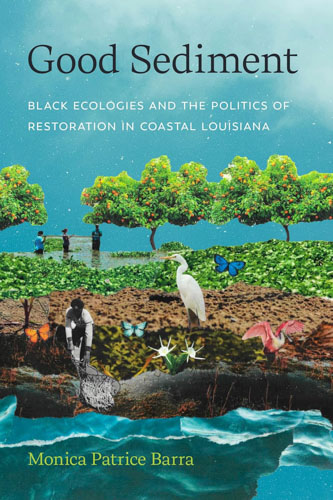
Good Sediment: Black Ecologies and the Politics of Restoration in Coastal Louisiana

When saving wetlands imperils Black futures, restoration demands reimagination

Coastal Louisiana is losing land at an unprecedented rate, and in response, scientists and policymakers have turned to massive restoration projects to slow the erosion. Good Sediment enters this charged landscape, where the promise of ecological renewal collides with the lived realities of Black coastal communities in Plaquemines Parish.

At the center of the book is the Mid-Barataria Sediment Diversion, the state’s most ambitious and controversial project: a $2 billion engineering feat that would redirect the Mississippi River’s mud and silt into disappearing wetlands. For policymakers, the river’s sediment is salvation. For the Parish’s multigenerational Black communities, however, this “good sediment” carries profound risks, including flooding homes and undermining fishing livelihoods.

Through ethnographic research, Monica Patrice Barra traces the multiple meanings of restoration as scientists, engineers, and Afro-descendant communities wrestle with what it means to “work with nature” in the shadow of climate change. She reveals how technical claims of environmental progress often sidestep questions of environmental racism, and how Black communities press instead for restoration that sustains culture, dignity, and intergenerational survival.

Unsettling the assumption that restoration is inherently benevolent, 
Good Sediment reframes ecological repair as a political and cultural practice—one that must grapple with the racial histories embedded in the land. This vital work bridges environmental anthropology, political ecology, and Black studies to imagine restoration otherwise: as a project oriented toward protecting Black life.