

This website has a .gov link

The .gov means it’s official.

Louisiana government websites often end in .gov. Before sharing sensitive information, make sure you’re on a Louisiana government site.

HTTPS Connection

The site is secure.

The https:// ensures that you are connecting to the official website and that any information you provide is encrypted and transmitted securely.

Shelley Ingram is Professor of English and Folklore at the University of Louisiana at Lafayette. Her research focuses primarily on the relationship between folklore and literature, including its connections to ethnography and race, region, food, ghosts, and environment. Her essays have appeared in edited collections and in journals such as Food & Foodways and Journal of Folklore Research, and she is co-author or co-editor of three books about folklore, literature, and place.


Schedule

Will be posted when available.


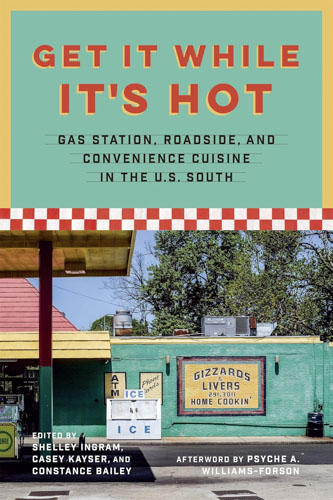
Get It While It's Hot: Gas Station, Roadside, and Convenience Cuisine in the U.S. South

Get It While It’s Hot brings together scholars, food writers, influencers, and even a CEO to discuss the phenomenon of eating by the side of the road. This innovative collection examines an increasingly commonplace belief across the U.S. South―that some of the best, most enjoyable food comes from places you would not expect: a gas station, the back of a pickup truck, or a ramshackle building made of plywood.

The essays collected here look at the delicious food that can be found in such spaces, but also at the ways that gas station, roadside, and convenience cuisine contributes to the social and cultural identities of people and communities in the U.S. South. Sometimes these roadside spaces serve goals of equity and food justice as they relate particularly to race, class, and gender, and sometimes they stymy them. Contributors address the importance of roadside vendors to low-income areas and communities of color, while also revealing how gas stations and convenience stores are particularly prone to anti-Black surveillance and community gatekeeping. Several essays examine the appearance of service stations and unconventional food vendors in southern literature. Interviews with photojournalist Kate Medley, social media influencer Stafford Shurden, and Stuckey’s CEO Stephanie Stuckey provide firsthand perspectives on the diverse landscapes of food culture in the South.

By surveying the importance of roadside and convenience cuisine to communities across the region, 
Get It While It’s Hot illustrates that these spaces do not function like typical restaurants. They mark boundaries of community, establish consistency and familiarity, and invite people, sometimes paradoxically, to pull up a chair and sit a while.